
Start a Blount County Property Search
Blount County keeps its property records in a split system. The Revenue Commissioner handles appraisal, tax, and mapping. The Judge of Probate records deeds, mortgages, liens, releases, plats, and probate instruments. The Circuit Clerk holds lawsuits that touch land. City offices keep zoning, subdivision, and permit files of their own. Start with Revenue when your clue is an address, owner, or parcel. Probate is the right stop for a deed book and page. It also fits when the clue is a party to a transfer or another recorded instrument.
Keep each source in its lane. A tax card names a taxpayer and assessed property. It is not proof of clear title. A GIS polygon locates land, but it is not a survey. A recorded deed proves an instrument entered the public record. It cannot resolve every unrecorded claim. Compare the sources before trusting any single result.
- Normalize the address and note whether it lies in Oneonta, Blountsville, Hayden, another town, or an unincorporated area.
- Use the Revenue property search to capture the tax year, parcel ID, owner, legal description, mailing address, and value.
- Open the county GIS viewer and compare the parcel shape, road, neighbors, and any map or plat labels.
- Carry the owner name, legal description, and book/page reference into the Probate land-record search.
- Contact the proper counter for a copy, an older volume, or a record that the online index does not expose.
Where Blount County Keeps Property Records
Three courthouse functions anchor the Blount County land trail. Probate serves as the recording authority. Revenue runs appraisal, mapping, and property tax together rather than presenting separate assessor and treasurer brands. The Circuit Clerk adds the court file when a foreclosure, partition, quiet-title claim, or lien dispute reaches a judge. The first two offices are the usual starting points.
Judge of Probate / Recording
220 2nd Avenue East
Oneonta, AL 35121
205-973-0584
Blount County Property Search Fields
The Blount Revenue property portal offers a compact set of search controls. The visible screen supplies Tax Year, Search Type, Search Terms, Subdivision, and a Search button. The dropdown option lists are not published ahead of time. So read the live menus rather than assuming a fixed address or name syntax. That limit matters most for older subdivisions. A subdivision name or an older road label can differ from the current mailing address.
| Visible Field | How to Use It | Research Limit |
|---|---|---|
| Tax Year | Choose the roll year being checked | Available years were not captured |
| Search Type | Select the lookup key offered live | Option list was not exposed |
| Search Terms | Enter the matching name, address, or number format | Exact syntax must be checked live |
| Subdivision | Narrow a broad result when listed | Subdivision choices were not captured |
The portal screen tells you what is known and what is not. Keep the exact spelling, tax year, and result wording. A failed search is a cue to try the legal description, a parcel reference, or the office counter. It is not proof the parcel lacks a record. The live Revenue search screen shows this county-specific entry point.
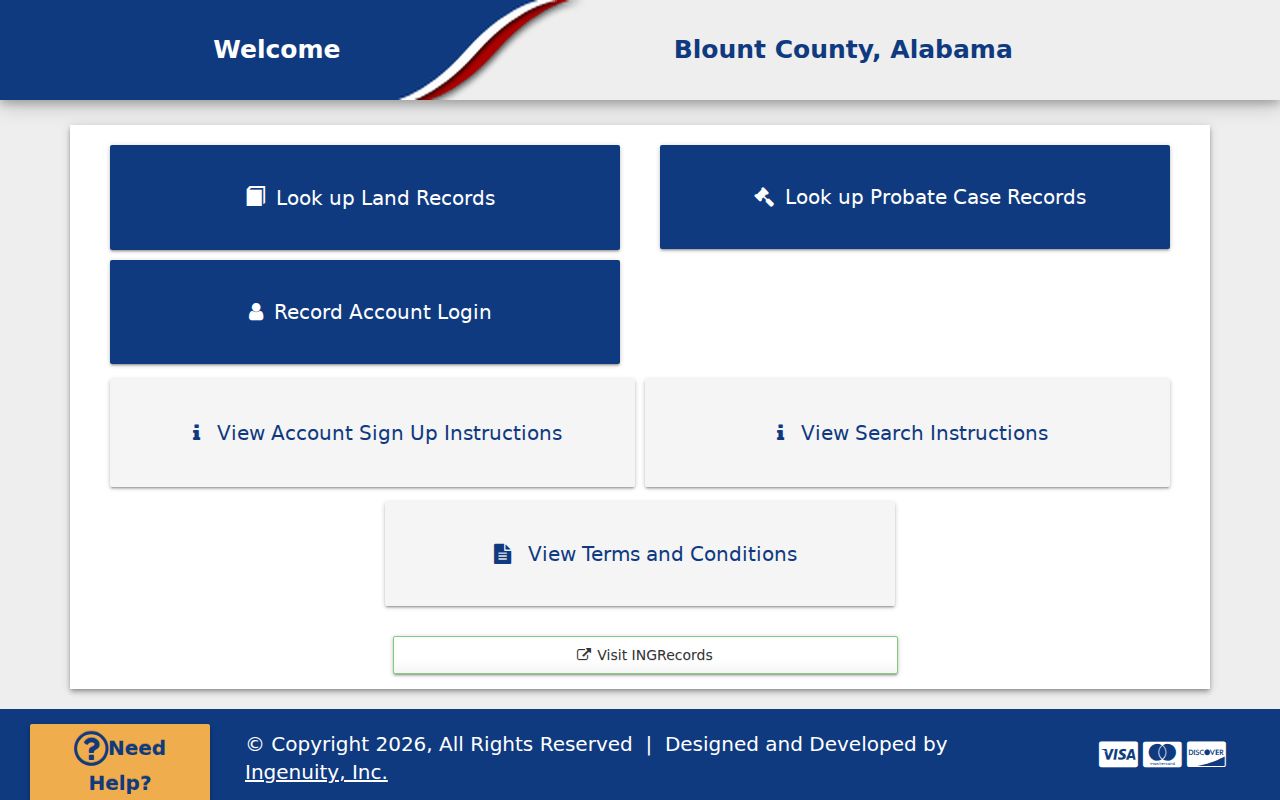
Its short form makes careful use of the dropdowns and tax-year selection especially important.
Blount County Property Maps Need Context
Blount County's mapping tradition runs deep. The Revenue mapping department keeps the county's tax maps. That lineage reaches back to ownership plat books arranged by quarter section. Statewide mapping standards arrived in the early 1970s, and aerial photography work began in 1973. The GIS maps available today grew directly out of that older framework. A modern plat layer can still tie a parcel to its roads, neighboring lots, and map references. One caution applies: the county states plainly that its tax map serves tax purposes.
Find the tax account first. Then open the Blount County GIS viewer and note the parcel ID shown on screen. Compare that label against the legal description in the deed. Draw no conclusion about boundaries before that check. The viewer's layer list and export tools are not documented. So rely on the parcel ID and the deed records rather than assumed layer names.
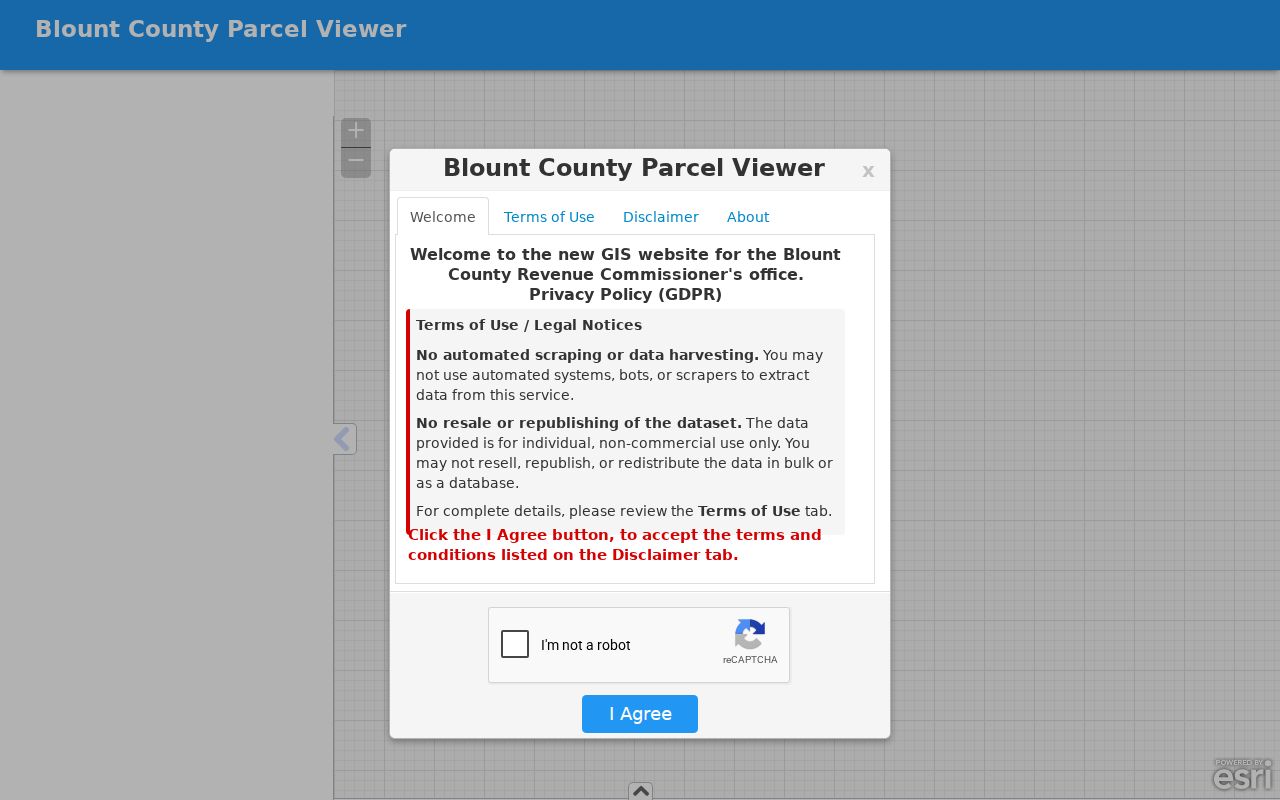
The viewer gives location context. The deed, plat, or survey carries the legal boundary evidence.
Blount County Property Record Types
No single file holds the whole property story. Blount County property records split ownership, value, location, debt, litigation, and land-use facts among county and city custodians. The table keeps the main record groups distinct.
| Record Type | What It Documents | Kept By | Access |
|---|---|---|---|
| Deeds and probate instruments | Transfers, parties, dates, legal descriptions | Judge of Probate | ING search, counter, phone, or written inquiry |
| Mortgages, liens, and releases | Recorded claims and later satisfactions | Judge of Probate and courts | Land index plus related docket |
| Tax and appraisal | Tax year, value, exemptions, balance | Revenue Commissioner | Property portal, Oneonta or Hayden counter |
| Plats and parcels | Map context, lot/block, recorded plat references | Revenue, Probate, planning offices | GIS, recorded plat, or office file |
| Building and zoning | Permits, reviews, land-use decisions | Applicable municipality | City downloads or direct request |
Use the deed when the question is who received title. Use the assessment when the question is how the county values and taxes the parcel. Use the plat or survey when a line or lot is in dispute. The detailed Blount County deed records process is separate from the tax-card lookup.
Probate Records Complete the Deed Trail
The Judge of Probate's recording page links land-record access and forms. It also covers fee material, maps, and property-tax resources. The vendor landing page separates land records from probate cases. It offers account instructions, search instructions, terms, and help. Search or image access may require an account or payment. Those limits matter when a name appears on a parcel card. The deed image may stay closed.
A thorough deed capture preserves grantor, grantee, document type, and recording date. Record the execution date when shown. Add book and page or instrument number, and consideration if present. Include the legal description, parcel reference, and image availability. Then hunt for mortgages, assignments, releases, corrections, plats, and easements. Look for estate instruments tied to the same names or land description.
The official Probate records page is the county's bridge from tax parcel to recorded instrument.
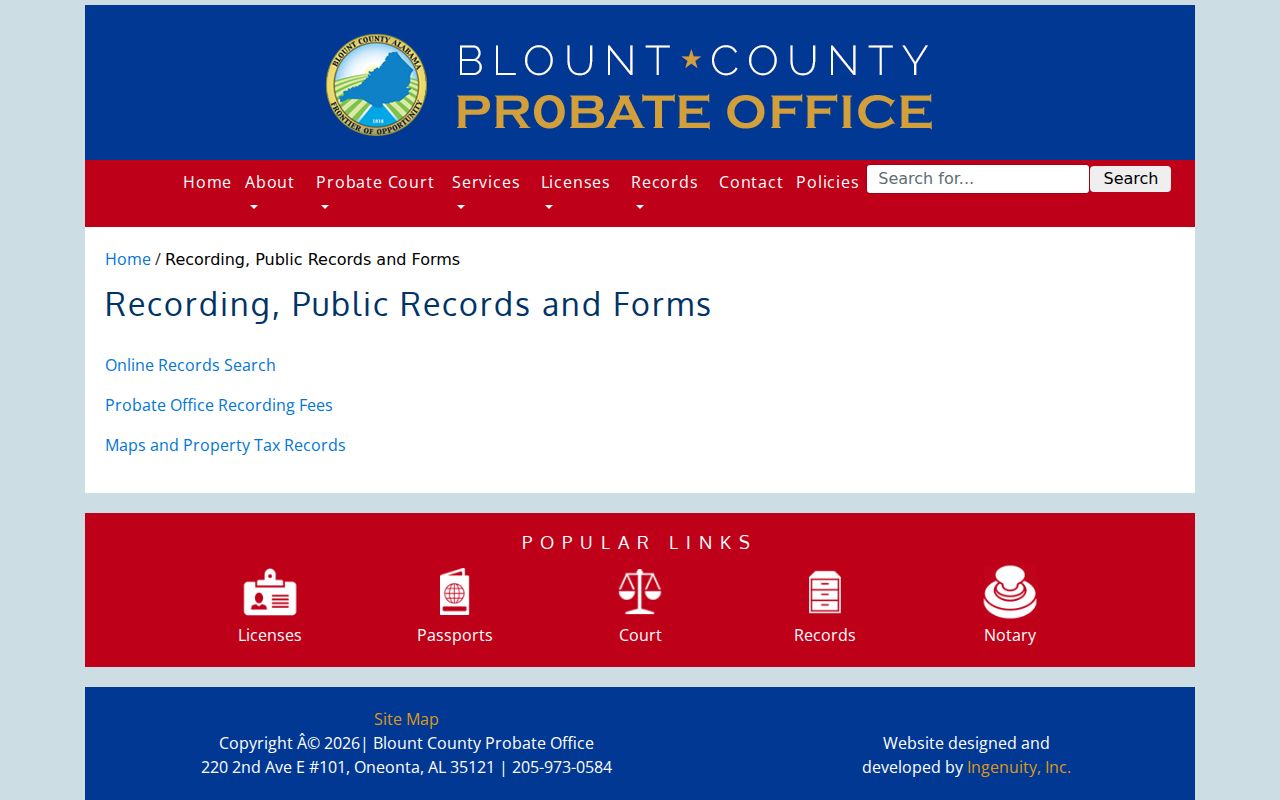
When the portal stops at a login or an image charge, other paths still work. The courthouse counter, a phone call, or a focused written request all remain valid.
Blount County Property Reviews Shape Values
Blount County's Revenue appraisal office tracks over 43,000 parcels. Each parcel gets an on-site review every four years. A value can move without any sale. Staff review new construction, damage, or an addition. Alabama appraisal aims at fair and reasonable market value for tax administration. The resulting figure is not a private appraisal. It is never a guaranteed sale price.
Owners should tell Revenue about improvements and property damage. Save the tax year and capture date with each figure. Otherwise you may compare a current value against an older record. That record described a different condition. The county's appraisal explanation documents both the parcel count and the review cycle.
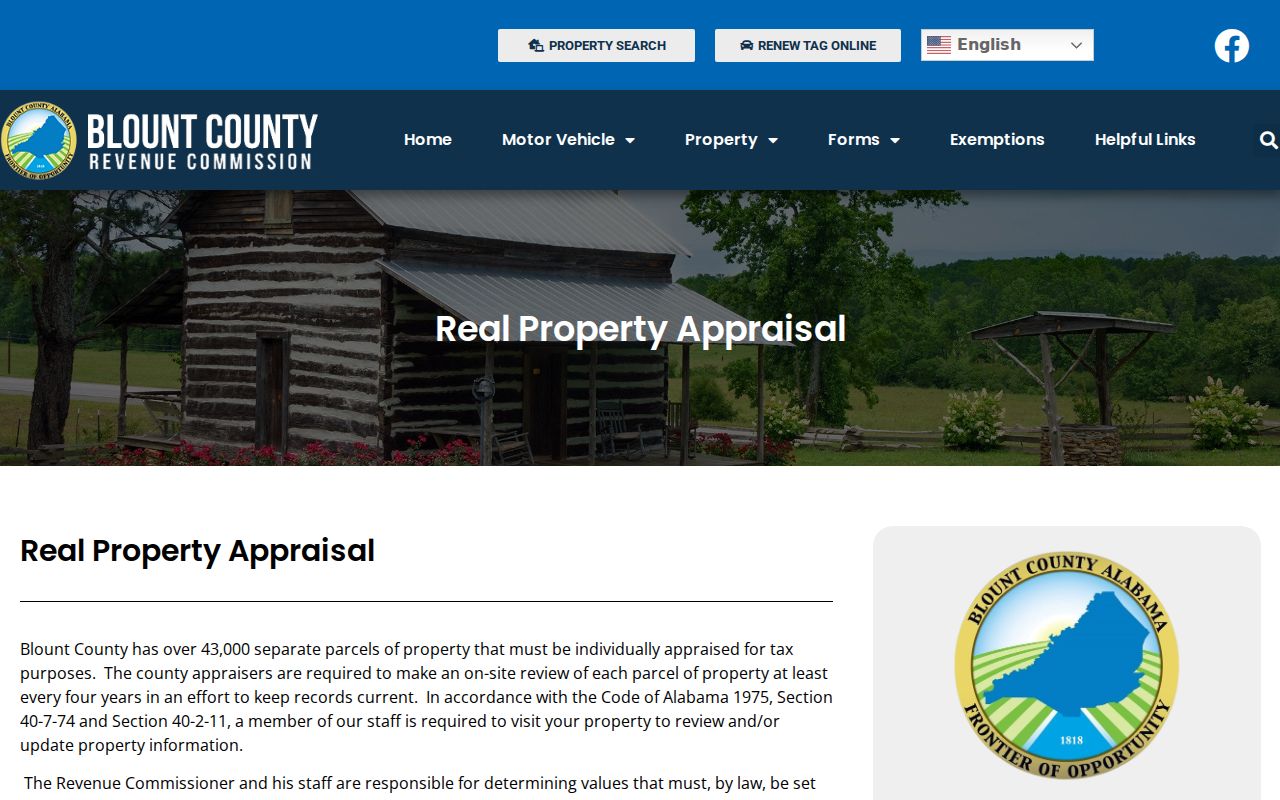
Those facts explain why value research must keep year, condition, and transfer history together.
Blount County Tax Liens Change Fast
Delinquent-property work in Blount County starts at Revenue, then moves to Probate and the courts. A dated March 24, 2026 notice announced an online Blount County Tax Lien Auction and Sale through Ingenuity Auctions. Bidders had to register and open an account. The notice was time-specific, though. Confirm the live auction status with Revenue before anyone acts on it.
An auction entry guarantees no title. Match the parcel and its legal description to Revenue before bidding. Probate holds the tax-sale certificate or deed, redemption, release, and later conveyance. Court records can add foreclosure, quiet-title, or surplus-funds proceedings. The tax-lien auction notice shows the county's dated process.
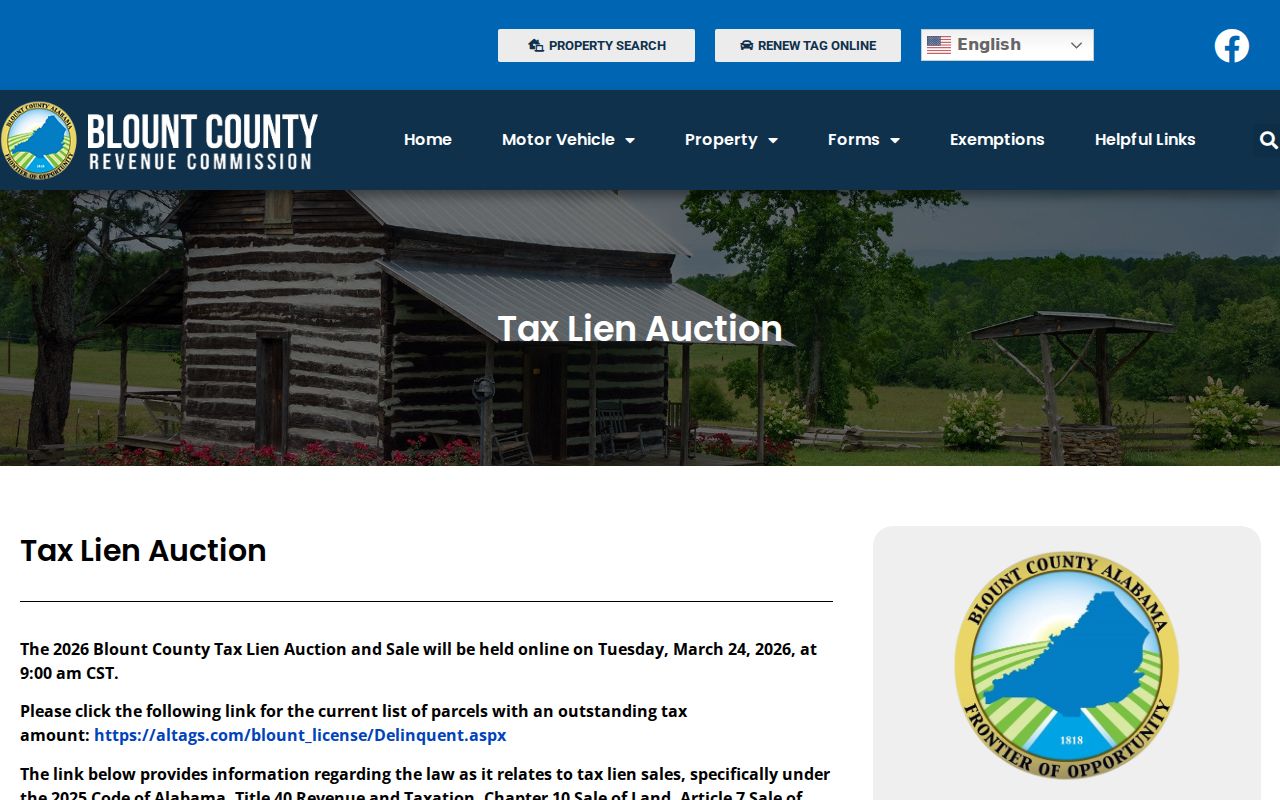
The notice is a lead, not proof of delinquency.
Older Blount County Property Record Clues
Older place names survive every modern search. Blount County dates to 1818. Blountsville served as an early county seat before Oneonta became the courthouse center. Old deeds and newspapers often lean on Blountsville geography. A post-office name may differ from today's situs address. Before GIS, ownership plat books organized parcels by quarter section and assessment year.
The Blount County Museum and Genealogy Research Center holds more than 500 research volumes and over 1,000 family files. That material can tie a misspelled grantor, a married name, a cemetery entry, a local business, or a forgotten road name to the right deed trail. It proves no title. Use each clue to return to a recorded deed, probate file, or plat.
- Grantor
- The party who transfers an interest.
- Grantee
- The party who receives it.
- Parcel
- A unit used for tax and mapping administration.
- Plat
- A recorded drawing that identifies lots, blocks, or subdivision land.
City Files Add Blount County Property Facts
A county parcel result never holds every municipal record. Oneonta's planning commission handles subdivision plats, street names, E-911 requirements, and zoning, while its building office follows the 2021 International Building Codes and posts permit forms. Blountsville's portal lists no public parcel-address permit index. A narrow request to town staff beats guessing. Hayden's documents page covers annexation, licenses, utilities, and taxes.
Ask each city for the exact file, whether a zoning classification, permit number, subdivision approval, certificate, or annexation date. Then keep the response beside the county deed, parcel, and tax material. City records show local approval, not title.
Build a Blount County Evidence Packet
A sound file pairs every fact with its source. Save the Revenue result with parcel ID, tax year, owner, mailing and situs addresses, value, exemptions, and legal description. Add a GIS capture showing road and parcel context. Pull the current deed and one prior deed. Include any recorded plat, easement, or survey referenced.
When an estate, lien, or dispute touches the chain, add the Probate instrument or court docket. A city parcel may need a zoning or permit file. Note a missing deed, an unindexed book and page, a name variation, a parcel split, or an absent release instead of forcing the sources into agreement. A parcel split often explains two cards for one tract.
Note: Save the portal name, exact URL, tax year, and access date with each image or printout.
Limits of Blount County Property Records
Blount County records have limits. Blount County property records can name the taxpayer, grantee, parcel reference, assessed value, recorded liens, and most land descriptions. They cannot say who occupies a home, whether every claim was recorded, or what a buyer will pay. Disputed boundaries stay unresolved too. Remember that owner, taxpayer, grantee, occupant, and mailing recipient are different roles. Label them that way.
Official sources beat copied commercial data because they name the custodian and the record date. Even official entries can lag. Verify a recent transfer against the newest recorded deed. Check a paid mortgage against its release and a mapped line against legal instruments or a licensed survey.
Lawful use. Blount County records support due diligence, boundary research, estate work, and civic review. They must never be used to stalk, harass, or harm a person.
Blount County Probate and Estate Changes
An assessment can sit in a deceased owner's name while an estate moves through Probate. Open the estate file through the Probate case route. Identify the personal representative, the court's authority, the heirs or devisees, and any distribution or conveyance instrument. A death certificate or obituary helps with identity and dates. Neither one transfers land.
Then loop back to the deed index. Match the legal description there. Look for an executor's deed, a personal-representative deed, an affidavit, a correction, or a later conveyance, since that loop often resolves a stale parcel card.
Blount County Property Records Deter Scams
Watch out for mail that pushes a paid copy of your own deed or claims a fee is required to reach a free county resource. Urgent payment demands and fake lien notices belong in the same category. Before paying anyone, call the county at a published number and ask. Compare the claimed filing against the Probate index or the Revenue account. Keep the envelope if fraud seems possible.
A commercial profile copied from public files is not title proof. Official Blount County property records carry the custodian, the record type, and the filing date. That trail of source details makes errors easier to spot and easier to correct.
Blount County Search Roles Stay Separate
A name on a Revenue account means one thing. A grantee on a deed means another. The taxpayer, the deed holder, the mailing recipient, and the site user can all be different people, and Blount County records often show exactly that. Estates, trusts, business entities, life estates, and recent transfers all pull those labels apart. Write each name down with its exact role attached. The record date and the document that created the role matter just as much as the name itself.
City and county records deserve the same care. A permit applicant may hold no title at all. A subdivision approval grants no lot. A court party is not always the winning owner of record. Every fact in Blount County property records stays dependable only while it remains tied to its custodian and its source document, whether that is a deed, a plat, or the assessor's tax roll.