
Fields in Blount County Property Tax Records
The Revenue Commissioner runs the county's appraisal, mapping, and property-tax workflow for the public. Each tax record ties one parcel to a single roll and its administrative values. Every field answers a narrow question. Note the tax year. A value can change from one roll to the next. So can an exemption or a payment status. Even the owner label may change from one roll to the next.
| Field | What It Shows | Where |
|---|---|---|
| Parcel or account ID | Connects the roll to the mapped tax parcel | Revenue property search |
| Tax year | Dates the assessment and bill context | Revenue search control and result |
| Appraised or market value | County estimate used in tax administration | Appraisal record |
| Assessed value | Taxable assessment figure shown for the parcel | Assessment record |
| Exemption and status | Relief applied and current tax condition where displayed | Revenue record and forms |
Assessed value, appraised value, and tax due are not interchangeable terms. Nor is the tax figure a private appraisal. A last-sale entry may reflect an estate, a correction, or a nominal transfer. It may also reflect another non-market deed. Read the deed itself before treating a sale as a comparable.
Blount County Property Reviews Cover 43,000 Parcels
The county's real-property appraisal office reports more than 43,000 parcels individually appraised and a four-year on-site review cycle. Owners are asked to report improvements and property damage. A value can shift after field review, new construction, or damage even without a sale. No deed transfer is needed.
Blount County calls fair and reasonable market value the aim of its appraisal for tax work. That is not a purchase offer. Save the roll year and record date. Keep the land and improvement detail where displayed, along with any notice that explains a change.
The county's Blount appraisal explanation page documents the scale.
A new value need not trace to any deed.
Blount County Property Tax Search Fields
The county property search shows Tax Year, Search Type, Search Terms, Subdivision, and a Search button. Its option lists appear only in the live tool. Do not assume a common address or parcel format will be accepted. Try the formats the portal actually offers.
| Search Control | Tax Use | Capture |
|---|---|---|
| Tax Year | Chooses the roll to inspect | Selected year |
| Search Type | Defines how the term is matched | Exact live choice |
| Search Terms | Supplies the address, name, or number | Exact entered text |
| Subdivision | May narrow a broad land search | Displayed subdivision label |
A failed query is not proof of anything. Try another known identifier, or call the Revenue office, before concluding a tax account does not exist.
Look Up a Blount County Tax Bill
Start with the current Revenue property search. Confirm the physical parcel before reading the bill. An owner-name match alone can join the wrong land to the wrong account, so anchor on the parcel ID instead. Use the legal description and tax year to keep the result stable, comparing current and earlier status only where the live portal provides it.
- Search the Revenue property system with the address or exact parcel reference.
- Confirm the situs, legal description, owner label, and tax year before reading amounts.
- Capture the value, assessed figure, exemptions, and status where the result displays them.
- Check the current delinquent or auction notice separately when unpaid taxes are at issue.
- Contact the Revenue counter or phone line when the online status is unclear.
- Assessed value
- The assessment figure used in the tax calculation.
- Appraised value
- The county's estimate for appraisal and tax administration.
- Homestead exemption
- Relief tied to a qualifying primary residence and application.
- Tax lien
- A claim arising from unpaid property tax.
Blount County Property Tax Homestead Proof
The regular homestead affidavit requires applicant names to match the recorded deed. It asks for deed book and page, property details, physical and mailing addresses, primary-residence status, a driver license, and two residence documents such as utilities or insurance. The county allows online or office filing. Apply by December 31 for the following year. A regular claim may still be made at other times.
A false claim can carry serious consequences under the Alabama law stated on the form. Check the current instructions first. The form also covers manufactured-home facts and asks whether another homestead must be canceled.
Annual Blount County Property Tax Relief
The over-65 Revenue form asks for ownership, deed book and page, primary residence, mailing and physical addresses, date of birth, and income evidence. An eligible owner must own and occupy the home. The amount of relief depends on income. Renewal is annual by December 31. Notices go out around mid-September, and failing to reapply can strip the exemption.
Relief turns on the recorded deed, residence proof, and yearly renewal. Age alone is not enough.
Current Use Changes Blount County Property Tax
The current-use program covers qualifying farm and forest land. Its rules can make tax treatment differ from a plain reading of apparent market value. A three-year rollback can follow a use change.
Save the classification field and the tax year. Then ask Revenue about the parcel's present status. Do not infer eligibility from acreage, a rural address, or a GIS image. The application facts and county decision control. The current-use record explains tax treatment, not ownership or a legal boundary.
Blount County Delinquent Tax Trail
A March 24, 2026 Revenue notice described a 2026 online Tax Lien Auction and Sale through Ingenuity Auctions at 9 a.m. CST, with registration and an account required. That notice was dated. It is not a permanent annual schedule. Check the live tax-lien auction page and the outstanding parcel link. That is where current status lives.
Match any delinquent entry to the Revenue parcel and the Probate legal description. Then search for a certificate or deed, redemption, release, and later conveyance. An auction listing guarantees nothing. It does not promise clear title, accurate boundaries, or a right to possess the land.
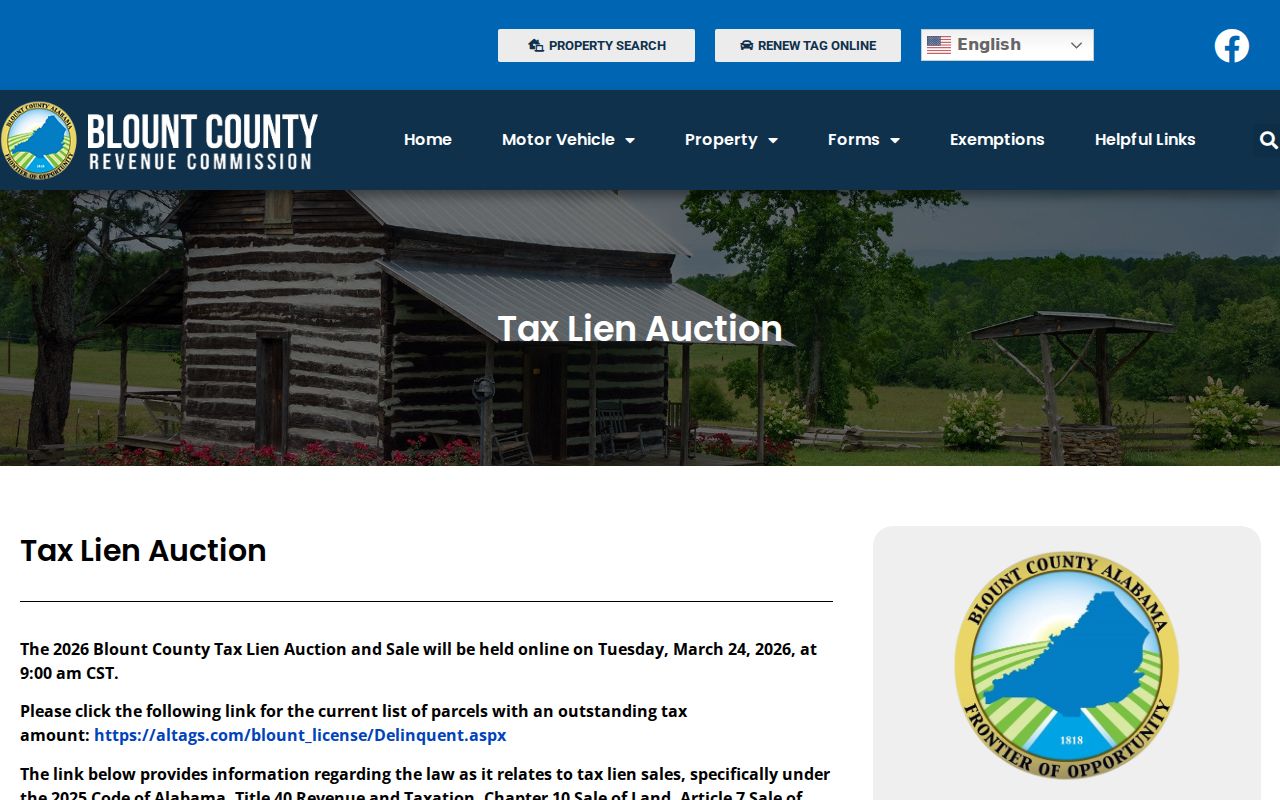
The notice is evidence of a dated process only. Verify whether any listed parcel or schedule is still current before acting on it.
Appeal a Blount County Assessment
Revenue mails a valuation notice whenever a property changes hands or its value rises. Blount County then allows an informal protest within 30 consecutive days. Start with the county's own appeal instructions. Name the parcel and the notice date. State the facts you dispute and the evidence behind your view. Photos, measurements, repair records, comparable sales, and the deed can all support a different appraisal. Use them only if they fit the dispute.
If the informal review does not settle it, the Board of Equalization comes next. Rely on the current notice rather than an older calendar. Appeal windows and cycles shift from year to year. Keep copies of everything you submit.
The official Blount appeal page spells out the county's 30-day process.
The notice date starts the practical clock, so save it before preparing the protest.
Appeal window. Blount County directs an informal protest within 30 consecutive days of the valuation notice, followed by Board of Equalization review when needed.
Correct a Blount County Property Tax Address
Blount County Revenue treats a mailing-address change as its own small filing. The form asks for the owner of record by name, plus phone and email. It wants both the old and new mailing addresses. Those stay separate from the situs address of the property itself. You state whether the move was away from Blount County property. Give a date or reason, and sign and print your name. A filer who is not the owner lists a relationship. That filer also grants staff permission to discuss exemption status. Revenue charges no fee for the correction and posts no set processing time.
A mailing fix never touches title. It only steers tax bills and assessment mail to the right inbox after staff review. Include the parcel number and situs address with your submission. Confirm later that the new address shows up in the tax roll. A deed error is a different problem. That one belongs to Probate.
Save a Blount Property Tax File
Build one tidy tax file for the parcel. Save the search screen and parcel ID together. Add the tax year, value fields, and exemptions next. Keep the bill status and notice date beside them. Pull in the deed only when ownership or a last-sale detail matters. Pull in the GIS map just to confirm you picked the right parcel. For a delinquent account, keep the dated outstanding-tax or auction notice. File any later redemption or release papers with it.
Note: Verify current tax status with Revenue before payment, purchase, appeal, or lien research.
When figures clash across years, compare the roll dates first. Revenue can explain whether a review, reported work, damage, an exemption change, or another administrative update caused the shift.
Improvements Can Shift Blount Assessments
New construction is not the only thing that moves a Blount County tax bill. Additions, manufactured-home details, storm or fire damage, demolition, and corrected property facts all feed into the appraisal. Revenue asks owners to report improvements and damage as they happen. Keep photos, dates, measurements, permits, and repair records when they bear on the property record.
A city building file and a county tax card answer different questions. One documents approvals and inspected work. The other reflects tax administration. Comparing the two helps, but neither alone proves the full structural history of a parcel.
Blount Tax Numbers Need Their Year
Every Blount County tax figure needs its year attached. A prior bill, a current appraisal, an exemption notice, and an auction listing may each describe a different tax year or stage of the process. Write the year beside every number you copy. Check what the status actually means: due, paid, delinquent, sold as a lien, redeemed, or merely listed in a dated notice. Then confirm the live status with Revenue before acting on it.
Value follows the same rule. A county estimate can move through review while the deed records stand still. That is why the four-year field cycle and current property condition matter as much as the sale trail.